
What Makes a Good Wildlife Photo?
See the Shot, Not Just the Animal.
✓ Backed by a 30-day money-back guarantee — join with zero risk, cancel anytime.
Get this course plus 1,000+ others — new courses weekly — for $249 $199/year. That's about 54¢ a day, and $40 less than paying monthly.
Rare doesn’t mean great.
Richard shows you what does.
About the Course
Plenty of wildlife photographers can find the animal. Far fewer can make an image of it that stops you cold. Legendary wildlife photographer Richard Bernabe joins Scott Kelby to walk through his own portfolio frame by frame — and show you what separates a record shot from a photograph people can't look away from. From jaguars in the Pantanal to polar bears in Svalbard to lions in the Masai Mara, you'll learn how a low angle puts you eye-to-eye with your subject, how gesture and light give a frame its energy, how a decisive crop pulls the viewer in, and when going wide tells a bigger story than the tightest telephoto shot ever could.
Why This Course Matters
Most wildlife photography instruction is about gear and getting close. Very little of it teaches you how to see.
That gap is why so many technically perfect wildlife images feel like specimens in a catalog. Richard built this course around the one thing a settings chart can't give you: judgment. You'll learn to read an animal's posture for the moment before it happens, to recognize the light that turns a portrait into a story, and to be ruthless about which frames survive the edit. Those habits follow you to every location and every lens you'll ever own.
Who's Teaching You
Learn from a photographer whose work runs in National Geographic
Richard Bernabe has spent more than two decades photographing wildlife around the world, from the Pantanal to the Arctic to Antarctica, and nearly as long teaching photographers how to see. He's the rare instructor who can look at a frame and tell you exactly why it works, and here he does it with his own images, one after another.
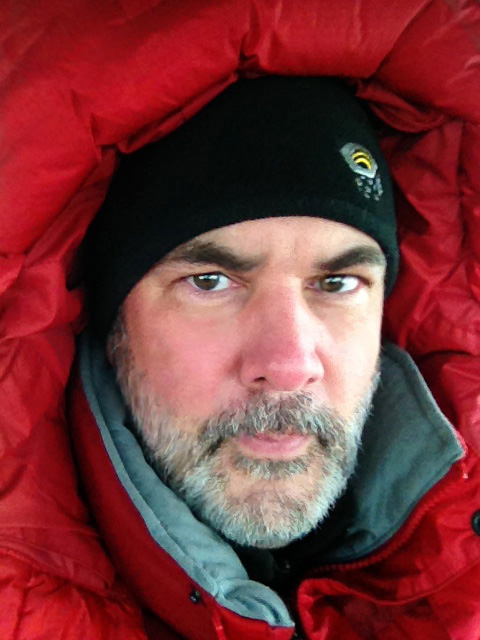
Richard Bernabe is an internationally renowned nature, wildlife, and travel photographer whose work has run in National Geographic, The New York Times, Time, Audubon, and the BBC. He's the author of Wildlife Photography and several other books, hosts the Beyond the Lens podcast, and leads workshops around the world — and he teaches the way he shoots: one image at a time, with a clear reason for every choice.
What You'll Learn
Skills you'll use on every shoot
From the moment you pick your angle to the frame you keep in the edit — here's what you'll walk away knowing how to do.
Get eye-to-eye with your subject
Low angles, eye contact, and animal eye autofocus that create instant connection — and why the closest subject is the only one that needs to be sharp.
Make light do the work
Light on the eye, rim light on backlit fur and feathers, side light for cinematic drama, and high-key and low-key processing that simplify the frame.
Read gesture before you press the shutter
The raised paw, swinging trunk, or bowed head that separates the keeper from the near-miss, and how to find it fast when you're culling.
Show motion on purpose
Panning at 1/6 of a second with the eye still sharp, and custom camera banks that switch you from slow shutter to birds in flight in seconds.
Compose with intent
Diagonals, S-curves, power shapes, patterns, and negative space used deliberately, plus the decisive crop that puts the viewer beside the animal.
Know when to go wide
Environment, layers, and story from a 24-105mm instead of a 500mm, and the two-body kit that lets you shoot both.
Try Before You Join
Watch a full lesson, free
No signup. No credit card. Press play.
That's one full lesson, free. The other twelve are ready when you are.
The Full Curriculum
13 lessons, start to finish
Just watched Lesson 2? Here's everything around it — tap any lesson to see what's covered.
Scott Kelby introduces Richard, who uses a single jaguar image from the Pantanal to reveal what turns a rare sighting into a great photograph — and why it took dozens of frames to get there.
A hippo and a lion at eye level show how a low camera angle, eye contact, and animal eye autofocus create instant connection — and why you should focus on the closest subject and let the rest go soft.
From polar bears in Svalbard to a leopard carved out of shadow, Richard shows how flattening your shooting angle from a distance and waiting for light on the eye give an image its power.
Richard drags the shutter to 1/6 of a second on a brown bear and a wildebeest to show how panning creates motion while the eye stays sharp — and sets up custom camera banks so you can switch modes in seconds.
Two lions shaking off water in perfect sync and a high-key penguin in Antarctica show how preparation creates “luck” — and why what you leave out of the frame matters more than what you put in.
Backlit baboons and impalas reveal how a dark canvas and rim light create drama, how to pick the one gesture that makes the shot, and how to lock focus when the light is behind your subject.
One side-lit frame beneath Kilimanjaro’s stormy skies shows how late sun, deep shadow, and generous negative space give a wide composition an epic, cinematic feel.
Elephants, giraffes, and rhinos show how a swinging trunk, a lifted leg, or a bowed head turns a good frame into the keeper — and how to spot those moments when you’re culling.
Richard compares crop options on a single image to show how cropping decisively removes unwanted tension and puts the viewer right there beside the animal.
Elephants, zebras, and penguin families show how diagonal lines, S-curves, and triangles pull the eye through the frame — no cropping required.
Blue-eyed shags, a fishing cormorant, and a cheetah with her cub show why animals doing something beat static portraits every time, and how high-key processing keeps the eye where it belongs.
Polar bears, king penguins, and a leopard seal on an iceberg make the case for stepping back — using S-curves, layers, and environment to create a feeling no tight shot can match.
Richard closes with pattern-driven compositions, negative space used with purpose, the pre-capture trick for catching birds leaving the perch, and the two-body kit he never travels without.
All 13 lessons are streaming right now. Join KelbyOne for just 54¢ a day →
From the Course
See what makes them work
Loved by Members
You're in good company
Rated 4.8 out of 5 — "Excellent" — across 1,843 reviews on Trustpilot. Here's what members say.
KelbyOne is so inspiring, exhilarating, fascinating and downright exceptional. Every aspect of KelbyOne is like a good novel that you can't put down. Great technical and useful knowledge.
These courses don't treat you like you're an idiot, but still walk you through step by step. Other members really go the extra mile to help you understand and progress as a photographer.
I am soooo pleased that I found this program. I am learning and growing by crazy leaps and bounds in my photography skills. The teaching style makes everything stick.
The classes are well done and I always learn something new. I especially enjoy the no-nonsense approach to teaching. It keeps what could be a dry topic interesting.
More Than One Course
This course is just the beginning
What Makes a Good Wildlife Photo? comes with your KelbyOne membership — and so does everything below. Tap any benefit to see what's included.
The full KelbyOne library covers photography, Lightroom, and Photoshop from first principles to professional technique — portraits, landscape, travel, studio and flash, wedding, sports, street, food, fashion, business, and more. Every course is taught by a working pro, broken into focused lessons you can watch in any order, and available to stream whenever you want. Start a class on your lunch break, finish it that night, and come back to it any time you need a refresher.
KelbyOne releases a new course every single week, so your membership is worth more the longer you hold it. New techniques, new gear, new software releases, and new instructors are added continuously — meaning the latest in photography and post-processing is always waiting for you, and you'll never pay extra for it.
Not sure what to watch next? Curated learning tracks sequence the right courses in the right order so you build skills step by step instead of jumping around. The Photographer's Fast Track is designed to save you years of trial and error, and your progress is tracked along the way so you always know what you've finished and what's next.
Your membership includes a growing toolkit of free Lightroom presets, Photoshop brushes, and other downloadable resources you can put to work right away. Many courses also include downloadable practice files so you can follow along with the exact images the instructor is using — learning by doing, not just watching.
Stream on your computer, phone, tablet, or Apple TV and pick up right where you left off on any device. The KelbyOne app also lets you download classes for offline viewing, so you can keep learning on a plane, a road trip, or anywhere without a connection. Your account works anytime, anywhere.
Learning is easier with people in your corner. KelbyOne members are a welcoming, genuinely helpful community — the kind who go out of their way to answer questions and help you progress. When a technique doesn't click, there's a place to ask, and real photographers at every level who are happy to help.
If you're unhappy for any reason, contact us within the first 30 days of an annual membership (or the first 7 days of a monthly membership) and we'll gladly cancel and issue a full refund. You also get access the moment you join, and you can cancel anytime from your account page. There's nothing to lose by trying it.
Membership
One membership. Everything unlocked.
What Makes a Good Wildlife Photo? and the entire library of courses come with a KelbyOne membership. Go annual and you'll pay just $249 $199 — about 54¢ a day — and save $40 over paying monthly.
Everything included
- This course — What Makes a Good Wildlife Photo?, all 13 lessons
- Full access to all 1,000+ courses
- A new course every week, at no extra cost
- Guided learning tracks & the Photographer's Fast Track
- Free presets, brushes & downloadable practice files
- Watch on desktop, mobile, tablet & Apple TV — even offline
- Friendly, helpful member community
Still on the fence?
Start monthly at $19.99/mo and switch to annual anytime. Heads up: paying month-to-month works out to $239.88 a year — $40 more than going annual.
Backed by a 100% Money-Back Guarantee
Not happy for any reason? Contact us within the first 30 days of an annual membership (or the first 7 days of a monthly membership) and we'll gladly cancel and issue a full refund. You get access the moment you join.
Questions? Answered.
Everything you need to know
Right away. The moment you join, you can sign in and start watching What Makes a Good Wildlife Photo? — and every other course in the library — immediately, on any device.
Absolutely. KelbyOne has courses for every skill level, taught in plain language, step by step. This course meets you where you are, and the rest of the library grows with you as you improve.
No. Richard shoots with long lenses, but this course is about seeing, not gear: the angle, light, gesture, cropping, and composition lessons apply to whatever you shoot. In Lesson 12 he makes the case for backing off with a 24-105mm and letting the environment tell the story.
Annual is the best value by a wide margin: $199 for a full year (regularly $249) works out to about 54¢ a day and saves you $40 compared to paying month-to-month ($239.88/year). Monthly is there if you'd rather start small — and you can switch to annual anytime.
Yes. Cancel whenever you like from your account page and you'll keep access until your membership period ends. You're also covered by our money-back guarantee — 30 days on annual, 7 days on monthly — so there's no risk in trying it.
Yes. Stream on desktop, mobile, tablet, and Apple TV, and pick up right where you left off on any device. The KelbyOne app also lets you download classes to watch offline — on a plane, a road trip, anywhere.
Of course — KelbyOne has members all over the world. All prices are listed in US dollars (USD), so just keep your local exchange rate in mind at checkout and renewal.
Yes. Watch the trailer at the top of this page, then scroll down to Lesson 2, Get Low, Get the Eyes, which is free to watch in full. No signup or credit card needed. If you like how Richard teaches, the rest of the course is one membership away.
The animal is only half the photograph.
Richard shows you the other half.
Join KelbyOne today and stream What Makes a Good Wildlife Photo? — plus 1,000+ more courses from the world's best instructors — with a single membership.
Join KelbyOne & Start Watching$249 $199/year · about 54¢ a day · Money-back guarantee